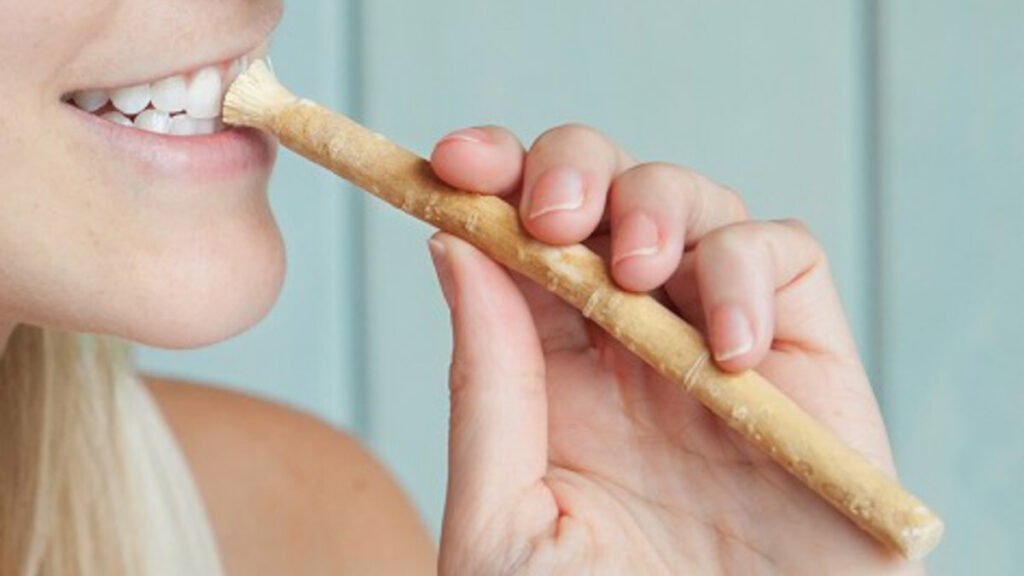
The question isn’t as simple as it sounds. Miswak and conventional toothbrushes work through entirely different mechanisms — and depending on what you value most in oral care, the winner changes.
This comparison covers seven categories: plaque removal, gum health, whitening, cost, environmental impact, convenience, and overall research evidence. We cite real studies. We give honest scores. And we tell you exactly who should make the switch — and who should not.
Head-to-Head: 7 Categories Compared
| Category | Miswak | Toothbrush |
|---|---|---|
| Plaque Removal | Comparable to toothbrush without paste; better in some studies | Best with fluoride toothpaste; requires proper technique |
| Gum Health | Tannins reduce inflammation; no bristle-induced recession risk | Depends on bristle hardness; overbrushing causes recession |
| Whitening | Natural silica + bicarbonate = gradual, gentle whitening | Whitening toothpastes have more abrasives; faster but harsher |
| Cost | ~$0.20–0.40 per stick; 2–4 weeks per stick | $3–8 per brush; $5–15 toothpaste per month |
| Environmental | 100% biodegradable; zero plastic waste | 4.7 billion plastic brushes enter landfill annually |
| Convenience | No water, no paste, no sink needed; pocket-sized | Requires sink, water, toothpaste; not ideal for travel |
| Chemical-free | Single ingredient: Salvadora persica wood | Multiple synthetic additives: SLS, fluoride, colors, preservatives |
Plaque Removal: What the Research Actually Shows
The most frequently cited study in the miswak-versus-toothbrush debate is a 2003 controlled clinical trial published in the Journal of Clinical Periodontology, which found that miswak was more effective at reducing plaque than a toothbrush used without toothpaste. When toothpaste was added to the toothbrush, the results were broadly comparable between the two.
A 2014 review of multiple studies found similar results: miswak consistently outperformed toothbrushing without paste, and matched toothbrushing with fluoride paste in several plaque index measures. The antibacterial compounds in Salvadora persica wood — particularly benzyl isothiocyanate — provide a chemical action against plaque-forming bacteria that physical bristle cleaning alone does not replicate.
Miswak was more effective at reducing plaque than a toothbrush used without toothpaste — Journal of Clinical Periodontology, 2003.
Gum Health: Where Miswak Has a Clear Advantage
Multiple studies have found significant benefits of miswak for gingival (gum) health. The tannins in Salvadora persica have documented anti-inflammatory and astringent properties that strengthen gum tissue and reduce bleeding on probing — a key clinical indicator of gum disease risk.
Conventional toothbrushes, particularly those with medium or hard bristles, carry a risk of gum recession from overbrushing — a problem that affects millions of adults and is effectively irreversible without surgery. Miswak bristles, while firm, tend to self-regulate because their natural flexibility reduces the risk of excessive mechanical force on sensitive tissue.
Whitening: Different Mechanisms, Different Results
Commercial whitening toothpastes typically use abrasive particles (often silica or calcium carbonate at concentrations exceeding natural levels) and sometimes peroxide to bleach stain compounds on tooth surfaces. The results can be rapid but come with documented enamel wear and sensitivity.
Miswak whitening works through two gentler mechanisms: the natural silica in the wood provides mild polishing of surface stains, and the natural sodium bicarbonate component neutralizes acids that contribute to staining. The result is gradual whitening — typically noticeable after three to six weeks — without the sensitivity or enamel erosion associated with aggressive whitening products. For the full breakdown, see our teeth whitening results post.
Cost Comparison: The Numbers
A conventional toothbrush replaced every three months costs approximately $36–96 per year, plus $60–180 in toothpaste. Total annual cost per person: $96–276.
A SEWAK Miswak Pack of 10 provides approximately five to ten months of oral care at two uses per day, depending on individual usage rate. Annual cost: significantly below conventional oral care. The cost-per-day of miswak is lower than virtually any commercial oral care routine.
Environmental Impact: Not Even Close
The environmental comparison is straightforward. Conventional plastic toothbrushes are non-recyclable in most municipal systems and persist in landfills for up to 400 years. Each miswak stick is 100% biodegradable, fully composting within weeks. The Salvadora persica tree regenerates after harvesting of branches, making it a sustainable source crop. If environmental footprint is a meaningful consideration in your purchase decisions, miswak has no meaningful competitor in oral care.
What the Research Summary Shows
A 2019 systematic review of 37 studies on miswak versus conventional oral hygiene tools concluded: miswak is a clinically effective tool for plaque removal and gingival health maintenance, with antibacterial properties that mechanically and chemically complement each other. The review found no significant health disadvantage to replacing conventional brushing with regular miswak use in adults.

Our Verdict
Choose miswak if you:
- Prefer natural, chemical-free personal care products
- Are Muslim and observe the sunnah practice of miswak
- Are committed to zero-waste or sustainable living
- Travel frequently and want a compact, no-water oral care option
- Have gum sensitivity or a history of gum bleeding
- Want to reduce plastic waste from personal care
Stick with a conventional toothbrush if you:
- Have significant active dental issues requiring your dentist’s specific tool recommendation
- Prefer the immediate fresh mint feeling of flavored toothpaste
- Are not ready to adjust to a different technique and taste
Ready to make the switch?
For most adults with normal oral health, miswak is a scientifically valid, cost-effective, and environmentally superior alternative to conventional oral care. The research supports it. The tradition behind it spans millennia. And the results, for consistent users, speak for themselves.
New to miswak? Start with our full list of proven benefits, then check out how to use miswak for step-by-step technique.
Ready to try?
Make the switch with SEWAK Miswak Sticks — Pack of 10, vacuum-sealed for freshness. Try it for two weeks alongside your current routine and experience the difference. Thousands of verified buyers have already made the switch.