10 Science-Backed Miswak Benefits: Why Millions Still Use This Ancient Stick
Before the toothbrush existed, before toothpaste was invented, and long before the dental industry became a multi-billion-dollar market, there was the miswak stick — and the science says it worked remarkably well.
Miswak (also spelled siwak, sewak, or meswak) is a natural teeth-cleaning stick made from the Salvadora persica tree, also called the Arak tree. Used across Africa, the Middle East, and South Asia for over 1,400 years, miswak remains a daily oral care tool for hundreds of millions of people around the world — including those who have access to modern toothbrushes and toothpaste but consciously choose the natural alternative.
In 2000, the World Health Organization formally recognized miswak as an effective tool for oral hygiene in developing nations. But the research supporting its use goes far beyond accessibility — miswak’s benefits are chemical, biological, and demonstrable.
Here are ten science-backed miswak benefits, explained.
What Is Miswak? A Quick Overview
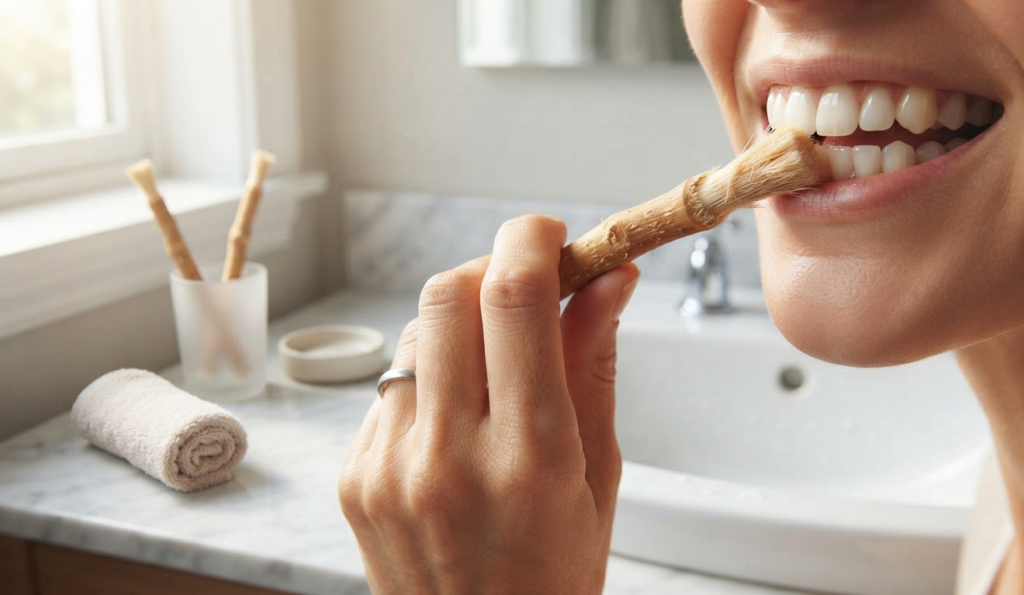
Before diving into the benefits, a brief primer. Miswak is a chewing stick derived from the roots or branches of the Salvadora persica tree. The stick is prepared by peeling back the bark at one end to expose natural fiber bristles, which are then used to brush the teeth in a motion similar to a conventional toothbrush.
Unlike synthetic toothbrushes, miswak requires no toothpaste — the active compounds are already present in the wood itself. The stick is biodegradable, plastic-free, and can be used without water, making it one of the most practical and sustainable oral care tools ever developed.
10 Proven Miswak Benefits
1. Powerful Natural Antibacterial Action
Salvadora persica wood contains benzyl isothiocyanate (BITC) — a sulfur compound with proven antibacterial properties. Studies have shown that BITC is effective against Streptococcus mutans, the bacteria primarily responsible for tooth decay and cavities, as well as Porphyromonas gingivalis, the primary driver of periodontal (gum) disease. Unlike synthetic antibacterial agents, these compounds are naturally occurring and have been part of the plant’s chemistry for thousands of years.
2. Natural Teeth Whitening Without Chemicals
One of the most frequently reported miswak benefits is noticeably whiter teeth — and the mechanism is well understood. Miswak wood contains natural silica, a mild abrasive that gently polishes the tooth surface and removes surface stains caused by coffee, tea, and food. Additionally, sodium bicarbonate (baking soda) occurs naturally in the wood — the same compound used in commercial whitening toothpastes. The result is gradual, natural whitening without the sensitivity that often accompanies chemical bleaching strips or gels.
3. Eliminates Bad Breath at the Source
Commercially marketed mouthwashes and flavored toothpastes mask bad breath rather than eliminating it. Miswak works differently. The antibacterial compounds in Salvadora persica target the anaerobic bacteria that produce volatile sulfur compounds (VSCs) — the actual cause of halitosis. Several clinical studies have found that miswak users report significantly fresher breath compared to toothbrush users, with the effect lasting longer after use.
| Miswak doesn’t mask bad breath — it eliminates the bacteria that cause it. |
4. Strengthens and Protects Tooth Enamel
Miswak contains naturally occurring calcium and phosphorus in concentrations that support enamel remineralization — the process by which weakened tooth enamel is repaired. It also contains fluoride-like compounds (specifically calcium carbonate and silicates) that have a hardening effect on tooth surfaces, reducing vulnerability to acid erosion from food and drinks. This makes miswak particularly valuable as part of a preventive oral care strategy.
5. Promotes Healthy Gums and Prevents Gum Disease
The tannins in Salvadora persica wood have documented anti-inflammatory properties that protect gum tissue and reduce the bleeding and swelling associated with gingivitis. Multiple peer-reviewed studies — including a 2003 study published in the Journal of Clinical Periodontology — found that miswak was more effective at reducing plaque than a toothbrush used without toothpaste, and comparable to a toothbrush used with paste in several measures of gum health.
6. Stimulates Saliva Production
Adequate saliva production is essential for oral health. Saliva neutralizes acids in the mouth, provides the primary mechanism of enamel remineralization between meals, and creates a hostile environment for harmful bacteria. The chewing and brushing action of miswak naturally stimulates salivary glands, increasing saliva output during and after use. This effect provides ongoing protection between meals that conventional toothbrushing does not.
7. Reduces Plaque Formation
One of the most clinically significant miswak benefits is its documented ability to reduce dental plaque — the sticky biofilm of bacteria that builds up on tooth surfaces and is the primary precursor to both cavities and gum disease. The combined antibacterial action of BITC, the mechanical cleaning of natural silica fibers, and the anti-adhesive properties of the tannins create a multi-mechanism approach to plaque control that rivals or exceeds conventional brushing alone.
8. Completely Chemical-Free
The average commercial toothpaste contains sodium lauryl sulfate (SLS), carrageenan, synthetic fluoride, artificial colors, and preservatives. Miswak contains none of these. For individuals with sensitive gums, chemical sensitivities, or a preference for clean-label personal care products, miswak offers a complete oral care solution with a single ingredient: Salvadora persica wood.
9. Eco-Friendly and Zero Waste
Every plastic toothbrush produced will persist in the environment for up to 400 years. Global plastic toothbrush waste exceeds 4.7 billion units per year. Miswak sticks are entirely biodegradable, composting within weeks. For individuals committed to reducing their environmental footprint, switching to miswak is one of the most impactful single changes available in the personal care category.
10. Convenient for Travel and On-the-Go Use
Miswak requires no water, no toothpaste, and no sink. A single stick fits in any pocket, bag, or car console. This makes it uniquely practical for travel, camping, long flights, or any situation where conventional oral care tools are unavailable or inconvenient. The individual vacuum-sealing on premium miswak packs (like SEWAK’s Pack of 10) ensures freshness is preserved until the moment of use, regardless of storage conditions.
Who Should Use Miswak?
Miswak is suitable for most adults and children over the age of three. It is particularly well-suited to:
- Individuals looking to reduce chemical exposure from personal care products
- Muslims observing the sunnah of miswak use before prayers
- Anyone pursuing zero-waste or sustainable lifestyle practices
- Frequent travelers seeking a compact, TSA-friendly oral care solution
- People with gum sensitivity or bleeding gums seeking a gentler alternative
- Individuals interested in natural teeth whitening without peroxide or abrasives
How to Get the Full Benefits of Miswak
To experience the miswak benefits described above, consistency is key. Most users notice a difference in breath freshness and gum health within five to seven days of daily use. Enamel and whitening effects typically become noticeable within two to four weeks. For best results, use miswak at least twice daily — ideally in the morning and before sleep. If you also maintain a conventional brushing routine, use miswak in addition to your regular brush rather than as a replacement initially, and adjust based on your results.
The SEWAK Miswak Pack of 10 features individually vacuum-sealed sticks that preserve all the natural compounds discussed above. Dried or improperly stored miswak loses its active oils and antibacterial properties, making freshness critical to experiencing these benefits. Each stick in the SEWAK pack is as potent as the day it was harvested.
Frequently Asked Questions About Miswak Benefits
Is miswak safe to use every day?
Yes. Miswak has been used daily by hundreds of millions of people for over a millennium with no documented harmful effects. It is safe for daily use in adults and children over three years of age.
Can miswak replace toothpaste entirely?
Miswak provides many of the same active benefits as fluoride toothpaste — antibacterial protection, plaque reduction, enamel strengthening, and whitening — through natural compounds. Many long-term miswak users discontinue toothpaste entirely. We recommend consulting your dentist when making significant changes to your oral care routine.
How long before I see results?
Breath improvement is typically noticeable within the first week. Gum health improvements (reduced bleeding, firmer tissue) usually appear within two weeks. Visible whitening effects may take three to six weeks of consistent daily use.
| Ready to try? SEWAK Miswak Sticks — Pack of 10, individually vacuum-sealed for guaranteed freshness. Each stick lasts 2–4 weeks. One pack provides months of clean, natural, chemical-free oral care. → Get SEWAK Miswak Sticks (Pack of 10) on Amazon — Individually vacuum-sealed, freshly sourced, delivered to your door. |